
Key takeaways
- A micro market works best when employee traffic and access patterns support frequent turns.
- Employers should ask how shrink, spoilage, payment, and service issues are handled.
- Smart coolers can be a lighter step when a full open market is not justified.
Start with the employee pattern
A Jacksonville employer considering a micro market should start with the boring question: how many people will use it on a normal workday? The answer matters more than the brochure. A location with consistent shifts, clear break periods, and a real food need is easier to support than an office with unpredictable attendance.
Hybrid offices, industrial facilities, medical offices, warehouses, schools, and municipal buildings can all have different usage patterns. A good provider should ask about those patterns before recommending equipment.
Decide whether the format fits
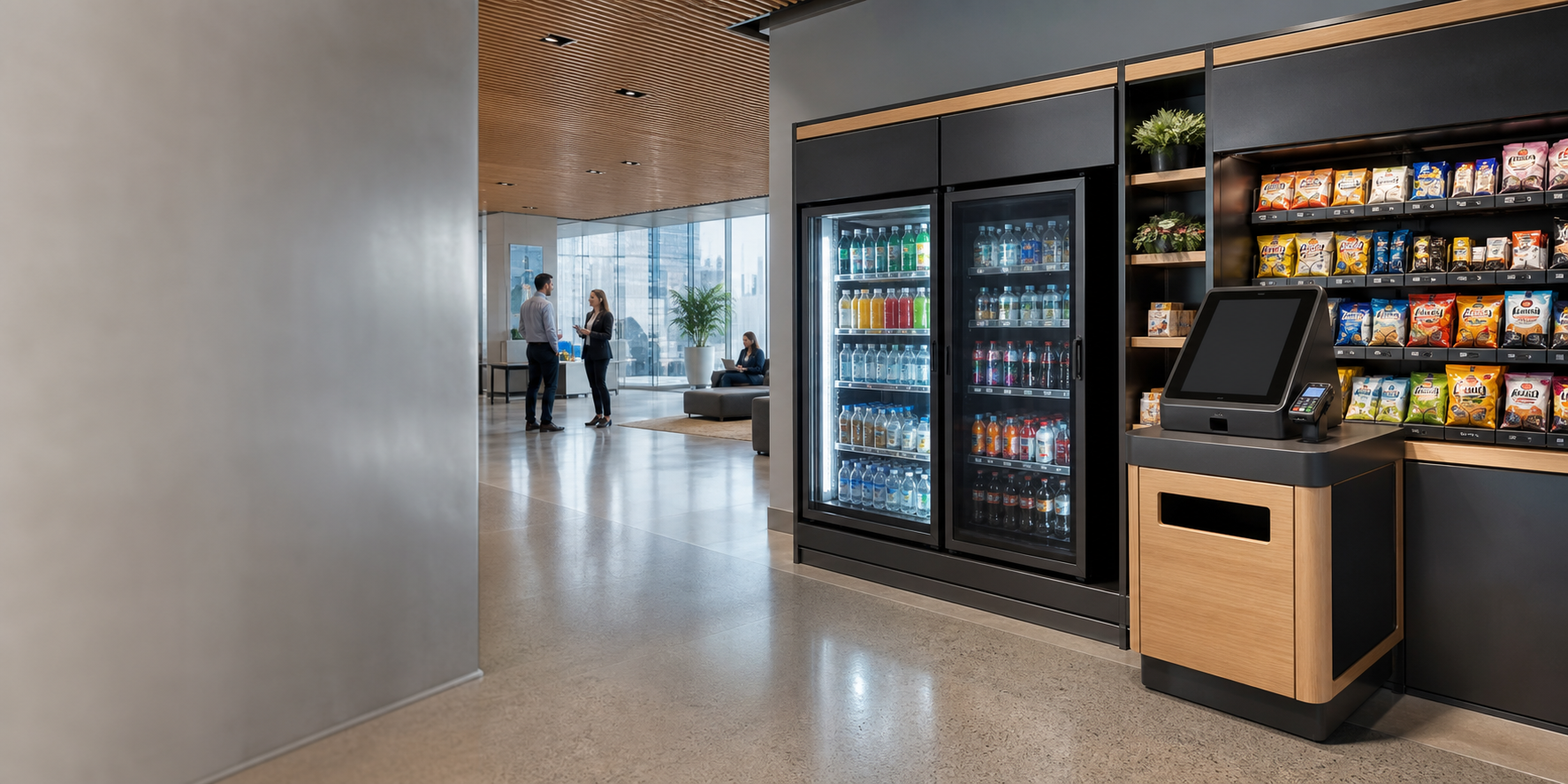
Not every location needs a full open micro market. Some accounts may be better served by a bank of machines, a smart cooler, pantry service, coffee, or a smaller refreshment setup. The right answer depends on traffic, desired products, theft risk, space, budget, and service access.
The employer should ask the provider to explain why one format is better than another for the actual location.
- Traditional vending for predictable snacks and drinks.
- Smart cooler for fresh or premium items with tighter control.
- Open micro market for larger breakrooms and broader product choice.
- OCS and pantry add-ons when retention and employee experience matter.
Questions about shrink and payment
Micro markets rely on trust, checkout design, cameras, signage, and culture. Employers should ask how missed scans are detected, how refunds work, how payment issues are handled, and whether payroll deduction, app payment, or kiosk checkout is available.
The goal is not to make the workplace feel policed. The goal is to set clear expectations so the account stays profitable enough to support good service.
Service expectations
A provider should explain how often the market will be serviced, how fresh food dates are managed, how product requests are handled, and what happens when equipment breaks. The service plan should fit the account's volume, not a generic route schedule.
Employers should also ask who the site contact is and how quickly problems are acknowledged. Breakroom service is visible to employees, so small failures can feel bigger than they are.
Operator playbook
Move
Qualify the account around real Jacksonville work patterns: shifts, access, parking, break times, employee count, product preferences, and service windows.
Move
Offer the format that fits the account rather than forcing a full market. Some locations need machines, some need a smart cooler, and some are ready for an open market.
Move
Make the employer part of the launch. A short internal announcement can set expectations around checkout, refunds, product requests, and shared responsibility.
Questions to ask before acting
These are the questions Vending Press would want answered before treating the story as an operating decision instead of a headline.
- How many employees are present on a normal Tuesday and Thursday?
- Does the account want fresh food, snacks, beverages, coffee, pantry, water, or a controlled cooler?
- Who will approve service changes, product requests, camera placement, and employee communication?
Metrics to track
| Format | Best fit | Watch point |
|---|---|---|
| Vending machines | Smaller or predictable accounts | Limited product range |
| Smart cooler | Fresh items with more control | Platform and service cost |
| Open micro market | Larger accounts with steady traffic | Shrink and merchandising |
| OCS/pantry | Employee retention and office culture | Budget and replenishment |
Employer questions
- How many employees are on site by shift?
- What products are expected: meals, snacks, drinks, coffee, pantry, fresh food?
- What payment methods are available?
- How are shrink, refunds, spoilage, and service problems handled?
- What format is recommended and why?
Where advertisers fit
Best-fit sponsors include Jacksonville operators, micro market platforms, fresh food suppliers, smart cooler vendors, OCS companies, and payment providers serving local employers.
Review Vending Press advertising options