
Key takeaways
- OCS and pantry programs are often evaluated as employee experience investments.
- Hybrid offices need flexible service plans that match real attendance.
- Vending operators can use OCS and pantry to deepen accounts beyond machine placement.
The breakroom is part of the workplace pitch
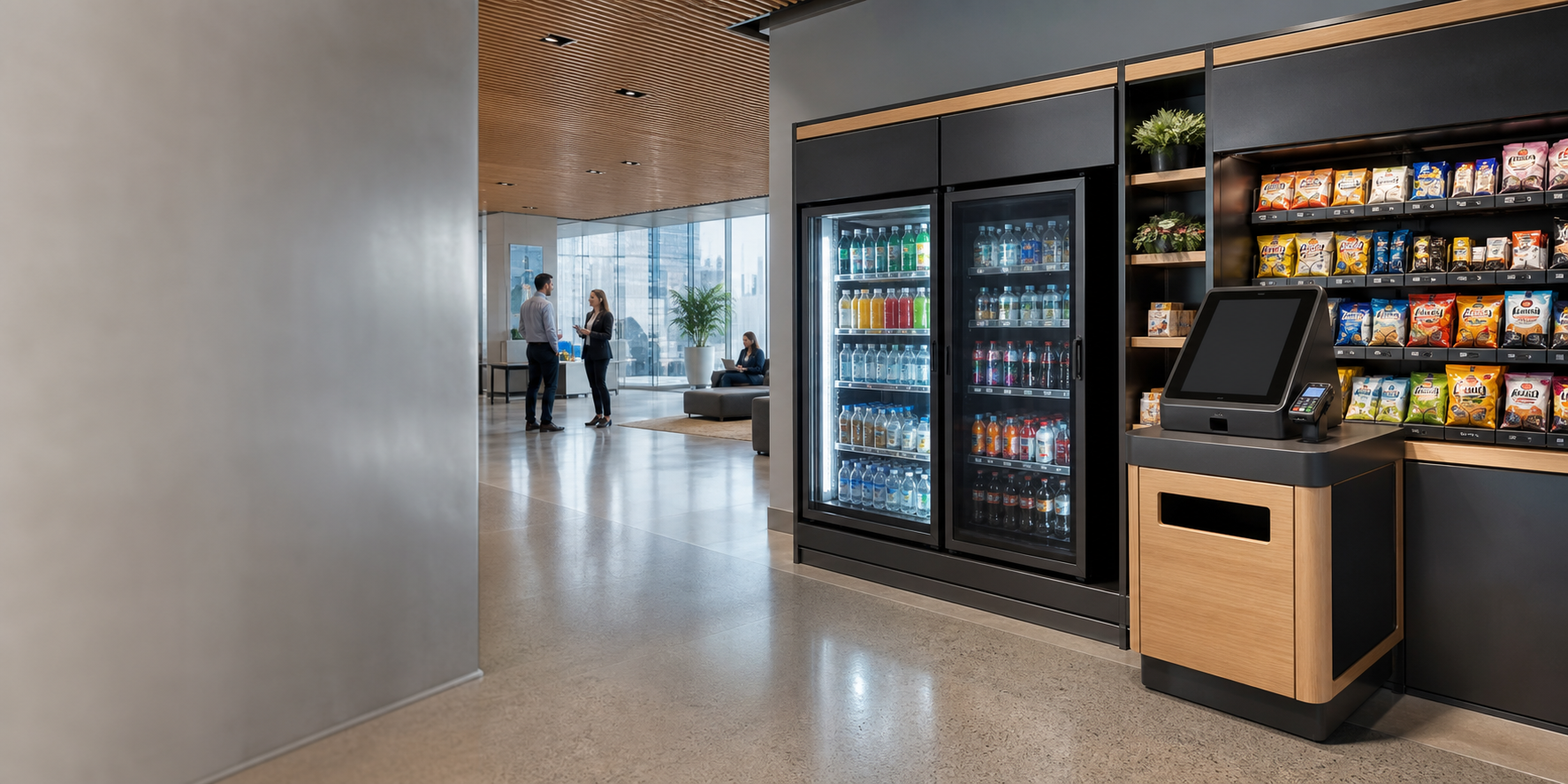
Office coffee service used to be judged mostly as a supply line: keep the coffee stocked, keep the equipment working, and keep costs predictable. That still matters, but the conversation has widened. Employers now think about the breakroom as part of the employee experience.
That shift creates an opening for vending and refreshment operators. A provider that can support coffee, water, pantry, machines, and micro market options can become more valuable than a vendor selling only one piece.
Hybrid work changes the service model
Hybrid attendance can make old service schedules inefficient. A Monday-heavy office may need a different delivery pattern than a location that peaks midweek. Employers should ask providers how service is adjusted when attendance changes.
Operators should track usage by product and day so they can right-size delivery instead of relying on stale assumptions.
- Attendance by day of week.
- Coffee, water, snack, and pantry usage by category.
- Spoilage or stale product risk.
- Employee requests and product satisfaction.
- Equipment downtime and response time.
Where vending operators can win
Operators already understand replenishment, route planning, product turns, and account service. Adding OCS or pantry can help them protect accounts from competitors who offer a fuller refreshment program.
The opportunity is strongest when the operator can bundle services without making the account feel complicated. One contact, one service expectation, and one refreshment strategy can be easier for the employer.
What employers should ask
Employers should ask how often equipment is cleaned, how quickly service issues are handled, what products can be customized, and whether the provider can support changing headcount. They should also ask for a simple explanation of pricing so pantry does not become an uncontrolled expense.
Good OCS and pantry service should feel generous to employees and manageable to the employer.
Operator playbook
Move
Treat OCS and pantry as account-depth services. They can protect the relationship even when machine sales alone are not enough to own the breakroom.
Move
Right-size the program to attendance. Hybrid offices need flexible replenishment and product rotation, not an old pre-2020 service schedule.
Move
Build a clear budget conversation. Pantry can feel generous to employees and still become frustrating if the employer cannot forecast spend.
Questions to ask before acting
These are the questions Vending Press would want answered before treating the story as an operating decision instead of a headline.
- Is the employer trying to improve convenience, retention, recruiting, productivity, or basic breakroom reliability?
- Which days and departments create the most demand?
- What budget control does the employer need: per employee, per department, per location, or product category?
Metrics to track
| Program | What it supports | Key risk |
|---|---|---|
| OCS | Daily workplace habit | Equipment downtime |
| Pantry | Retention and convenience | Cost control |
| Water | Basic workplace amenity | Service consistency |
| Vending | Self-serve variety | Product fit |
OCS and pantry planning
- Attendance pattern by day and shift.
- Budget per employee or per location.
- Coffee equipment, water, pantry, and vending mix.
- Cleaning and service response expectations.
- Product request and substitution process.
Where advertisers fit
Best-fit sponsors include coffee roasters, water systems, pantry suppliers, OCS equipment vendors, workplace snack brands, and operators expanding beyond traditional vending.
Review Vending Press advertising options